
个人中心
个人中心

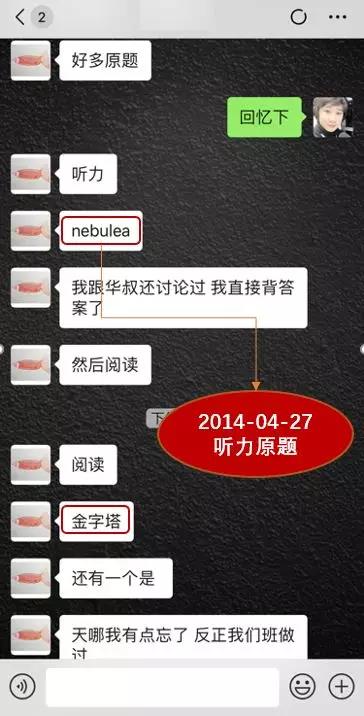
今天A卷听力部分,一篇astronomy讲座,讲的是nebula(星云),这是2014-04-27大陆真题。这也是我们刚结课集训做的原题,看下图。
这篇天文讲座谈的是星云。星云是由气体和尘埃组成的云,分布在银河系和星际空间的各处。
星云分成三个类型:发射星云(Emission Nebulae),反射星云(Reflection Nebulae),黑暗星云(Dark Nebulae)。
下面是华叔该篇的笔记。序号是第1-5题的答案出处。
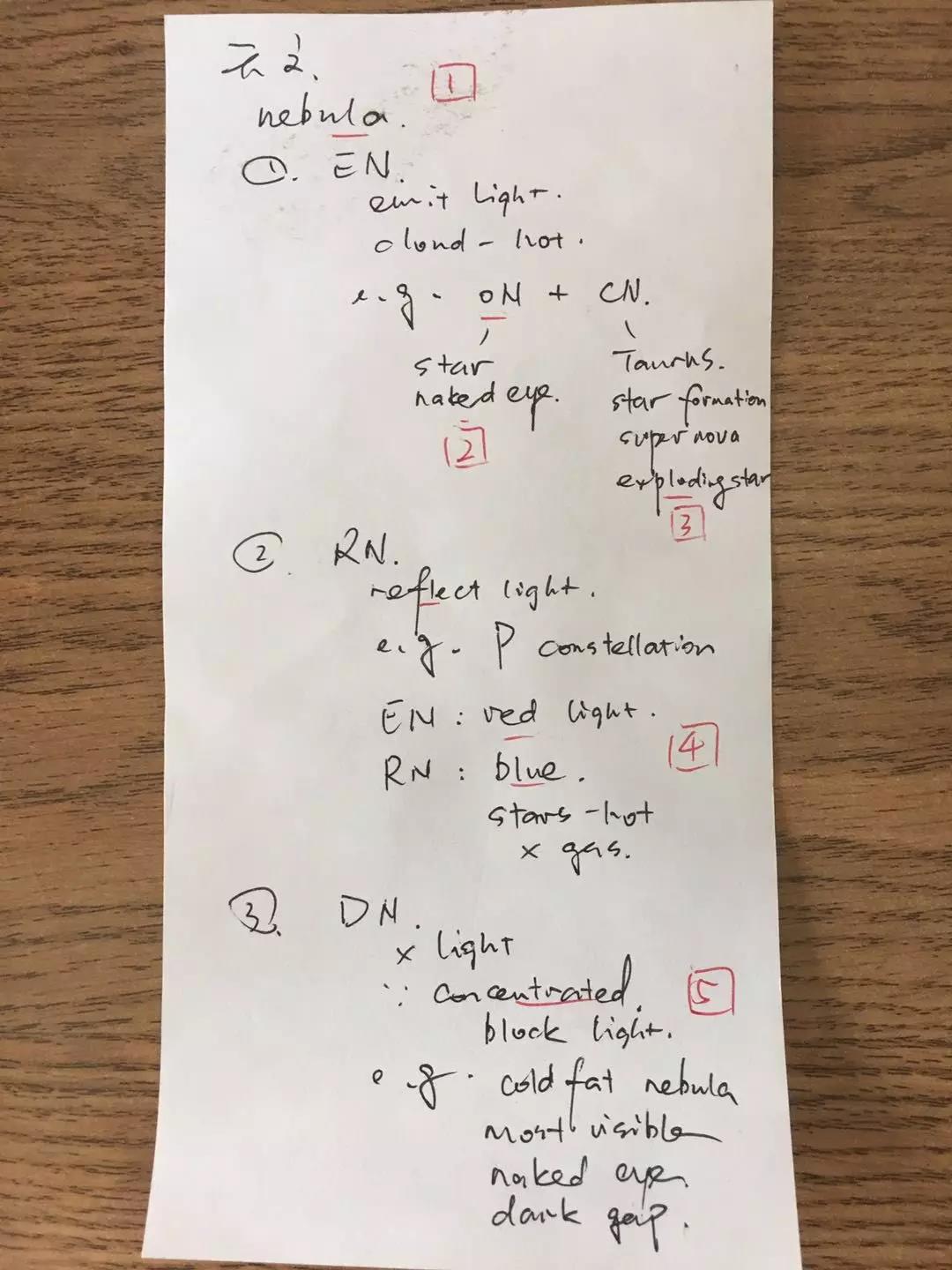
▲ 华叔听力笔记
笔记一定要注重层次,注重听与记的平衡,这是集训课程当中华叔会反复训练学生的能力。
这篇听力还出现了一道表格题,很有意思,题干中说其中一个选项不需要用(One of the answer choices will not be used)。
答案如下,你做对了吗?

②
今天B卷听力部分,一篇geology讲座,讲的是Snowball Earth,这是2014-05-25大陆真题。这也是我们刚结课集训做的原题,看下图。
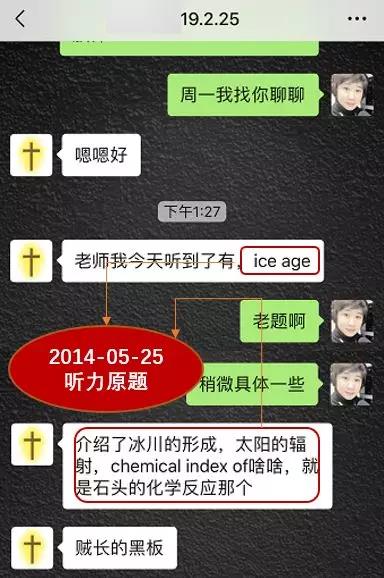
这位同学说的贼长的黑板,指的是:chemical index of alteration。
地质学的讲座难度都较大,尤其是这篇涉及的专业词汇和术语较多。
原文如下。
So continuing with ice ages, we've looked at the Pleistocene Ice Age up through the so-called Little Ice Age in Europe.
But today I'd like to talk about a controversial hypothesis that Earth went through tremendous ice ages before all these others between approximately 600 and 700 million years ago during a geologic period that's known as the Cryogenian.
Cryo is from the Greek and means cold. The name comes from the glacial deposits going back to this period. They’re found all around the world, which indicates that glacier spread across all the continents at that time even near the equator.
And this is the premise of a hypothesis commonly called Snowball Earth. The name pretty much described the condition that it is just proposed existed than with not only the continents, but also the oceans entirely covered with thick sheets of ice. But how could the Snowball Earth climate have come about?